
Home > Weightloss > GLP-1
She Refused to Take GLP-1 Injections Because Of The Side Effects – So She Did This Instead And Lost 48 lbs in 6 Months
New analysis of 400,000 real patient reports is revealing side effects the clinical trials never listed – and quietly changing how women over 40 are approaching weight loss.
By Michael Tanner (Fitness Expert), Advertorial

Older Americans are switching.
More people over 60, particularly those with mild to moderate hearing loss, are walking past the audiologist’s office, not because of a new device, but because of a new chip.
For decades, the path was the same. You noticed your hearing fading. You eventually booked an appointment. You sat in a clinic for an hour and walked out with a multi-thousand-dollar quote and a device that required a series of fitting and adjustment visits.
A growing number of people are choosing not to do that anymore.
What changed was not where people went for help. It was a small processing chip, one that makes speech easier to hear in everyday situations. No doctor’s appointment. No fitting visit. No hearing test. It ships in a box you open at your kitchen table.
Word about this shift has spread mostly through family conversations and reviews. We took a closer look at why so many people in this group are making the switch and what they are switching to.
Hearing loss is more than just volume

When people first start to lose their hearing, the most common assumption is that the world has gotten quieter. The more common refrain is “everyone mumbles these days.” That is not quite right.
If you can hear that people are talking but you just cannot make out the words, here is why.
Deep inside your ear, a spiral bone called the cochlea is lined with thousands of microscopic filaments called stereocilia. They read sound waves and convert them into the electrical signals your brain processes as speech.
As you age, these stereocilia break down, and they do not regrow. The high-frequency ones take the most damage first, which is why consonants like “s,” “f,” and “th” are the first sounds you lose.
Those are the sounds that tell your brain where one word ends and the next one begins.
Even if you hear most of what someone is saying, you have lost your navigation. Your brain has to actively work to fill in the gaps that it used to process without thinking. That is why conversations have become so tiring, and why a noisy restaurant or a family dinner feels less like a conversation and more like a test you are failing.
That is why simply turning the volume up rarely solves the problem.
The volume was never really the issue
The category of hearing aids that doctors fit at the clinic addresses this well. Modern prescription devices process incoming sound in ways that go far beyond amplification. They sharpen voices. They reduce background hum. They help people follow conversations in difficult environments.
So if those devices work, why are so many people walking away from them? Here is the part the conversation usually skips over.
What nobody tells you about the prescription path

The answer, in most cases, has nothing to do with whether prescription hearing aids work. It has to do with what the path to getting them looks like.
For mild to moderate hearing loss, the single biggest barrier is price. A pair of prescription hearing aids in the United States typically runs in the range of $4,000 to $7,000.
Many private insurance plans do not cover them. Original Medicare does not cover hearing aids either, leaving most retirees to face the full price out of pocket.
One customer summed up the price reaction in a phrase that has shown up repeatedly in hearing-aid reviews:
“$6,000 for hearing aids is robbery.”
The price is the part most people talk about. It is not the only barrier.
There is the chain of appointments. The fitting visit. The follow-up visit. The adjustment visits when something does not feel right. Most people who go this route describe it as a project, not a purchase.
There is the maintenance over time. Hearing changes, and prescription devices need to be retuned in the office. Repairs happen. Pieces get lost.
And here is the quieter cost almost nobody mentions until it happens to them. Once you have paid several thousand dollars for a small device, you become afraid of breaking it.
People take their hearing aids out at the beach. They worry about them in the rain. They take them off before bed and then forget where they put them.
The expensive device starts living more carefully than the person wearing it.
For someone with severe hearing loss, every one of those costs may be worth it. The need is medical, the hearing aid is essential, and the fitting visits are part of the standard of care under a doctor or audiologist.
But for everyone else…
Might there be a better deal?
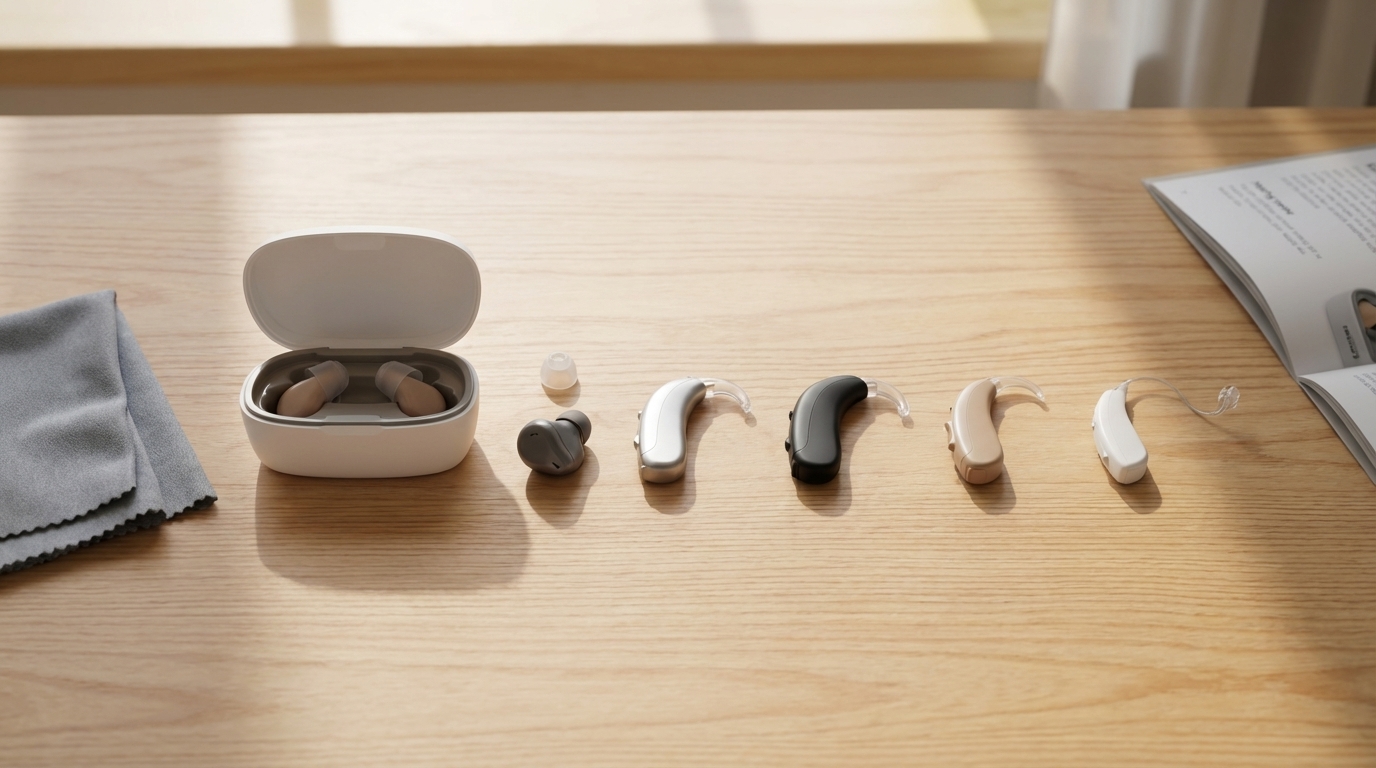
A quick way to find where you sit.
If you can follow one-on-one conversations but struggle in noisy restaurants, you are most likely in the mild to moderate range.
If you have trouble hearing in quiet rooms or rely on lip-reading, your loss may be closer to severe and a doctor’s visit is the right next step.
Roughly 25 million Americans are currently living with untreated hearing loss. About three quarters of them have mild to moderate loss. The other quarter needs something stronger.
For mild to moderate hearing loss, the math looks different. Four to seven thousand dollars does not just buy a device. It buys the visits, the fittings, the retuning, the repairs around it. For severe hearing loss, that infrastructure is essential. For mild to moderate, much of it is overhead you do not need.
So what changed?
The technology inside prescription hearing aids that sharpens voices and reduces background noise used to require huge teams and millions of dollars in development. That is what pushed the price so high. Not the technology itself, the cost of building it.
Advances in how we can analyze sound data and model how the ear works have changed that math. What once took massive research budgets can now be done on a regular computer, using real-world sound data to learn exactly what adjustments are needed to boost the human voice for maximum clarity.
That is how a single chip was able to do what used to take an entire clinic. And the device it sits inside does not require a prescription, a hearing test, or a single appointment. You open the box at your kitchen table and start.
Less cost. Less hassle. Less waiting. The same goal, for the right kind of hearing loss, on different terms.
The Vox Humana chip
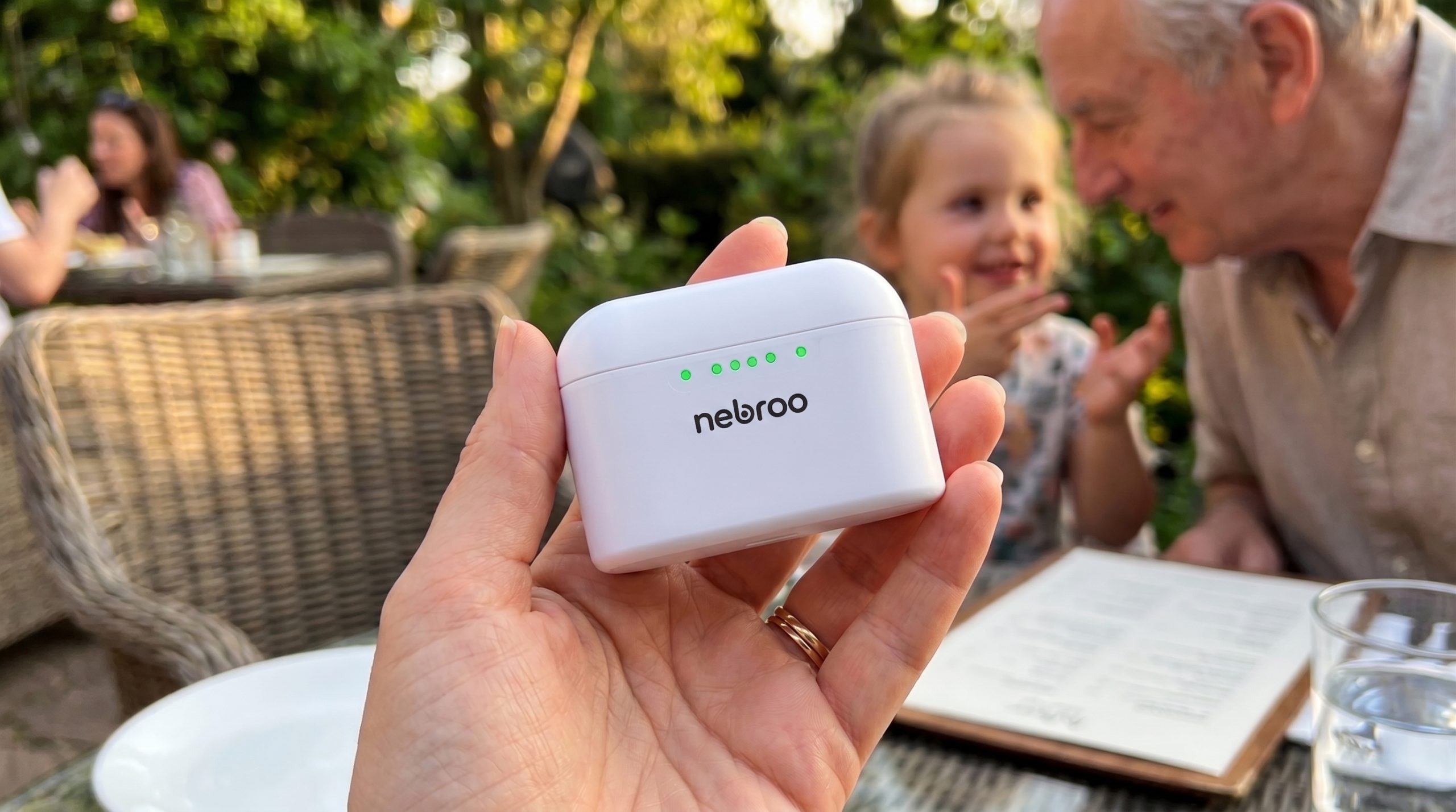
The new device most often mentioned in this shift is called the Nebroo Pro 3.0.
It is a small in-canal hearing aid. The body sits inside the ear canal. There is no piece behind the ear and no visible wire. The whole device is roughly the size of an earbud.
Inside it is a processing component the company calls the Vox Humana chip.
Here is what it actually does. It processes the sound around you before that sound reaches your ear, boosts the human voice and removes background noise.
When you are sitting at a noisy restaurant table, it helps the voice across from you stand out from the background. When the television is on at the volume the rest of the family is comfortable with, the dialogue becomes easier to follow. When your grandchild leans in to whisper, you hear it.
There are six volume levels adjustable with a button on the body. The battery is rechargeable and runs roughly 19 hours on a full charge.
120-day money-back or replacement guarantee. No prescription required.
What about the cheap amplifiers on Amazon?
The honest question to ask at this point is the obvious one. What about the dozens of cheap hearing devices on Amazon for $40, $60, $99? Most of them are not actually hearing aids. They are personal sound amplifiers, often called PSAPs, and they have a specific problem.
They Only Do Volume.
That is not a marketing line. It is what they were built to do. They take the sound around you and make all of it louder. The voice across the table, the silverware on the plate, the air conditioner, the table next to yours. Everything gets boosted at the same time.
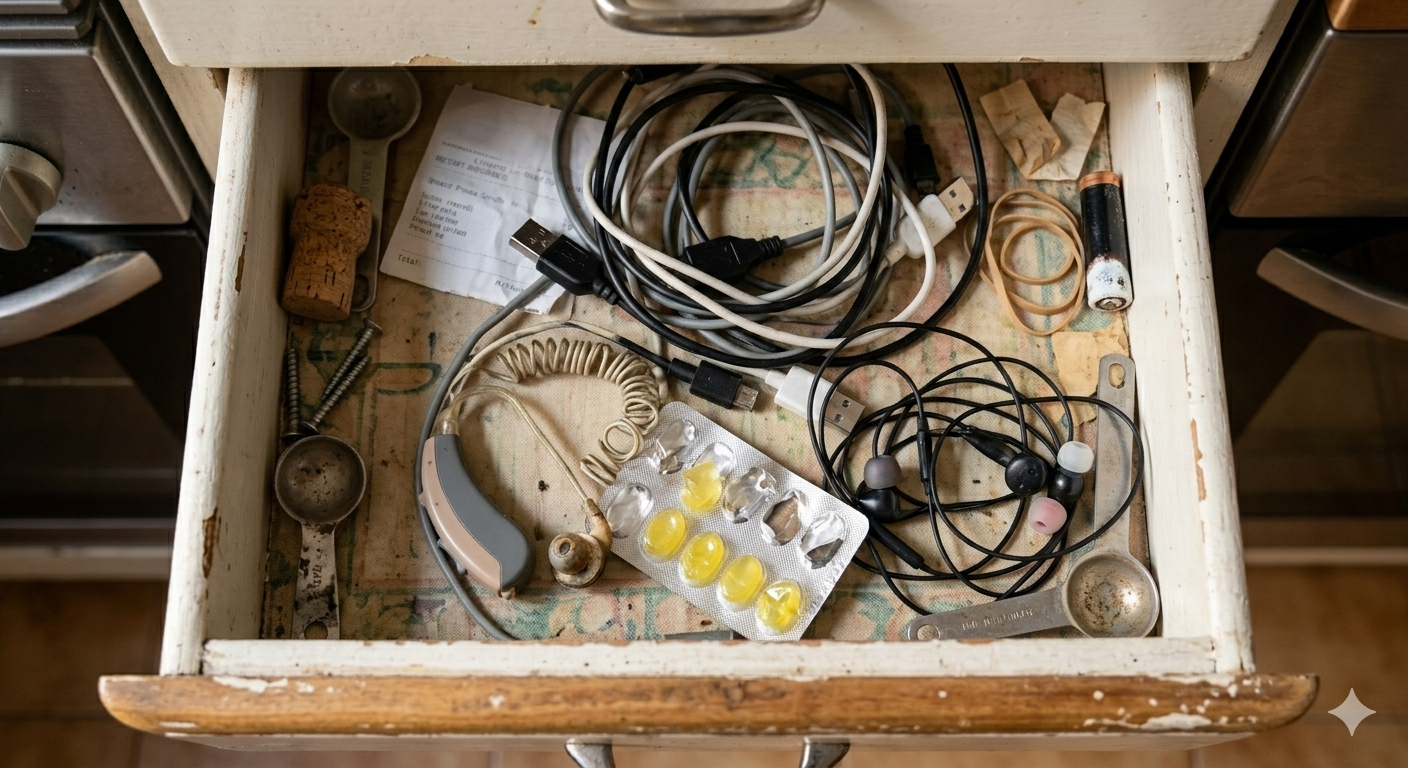
The result is familiar to anyone who has tried one. You hear more, but you understand less. The room becomes a wall of noise. The amplifier whistles when you turn your head a certain way. After two weeks, it ends up in a drawer with the cables and the cough drops, and it stays there.
This is the part of the hearing market that has burned a lot of people. Most of the friends and family members who told you “those things do not work” were almost certainly talking about a cheap amplifier they tried and gave up on. The lesson they took from that experience was that nothing works.
The category designed for mild to moderate hearing loss is not the cheap amplifier category. The two are built to do different things.

The thing that comes up most often in customer reviews is not a feature of the device. It is the moment things came back into focus.
The people who used to think everyone was mumbling suddenly hear individual words again.
One review describes the first time the writer ate dinner at a restaurant with friends and followed the whole conversation without leaning in. Another describes walking around the house and being able to hear the birds outside again.
People talk about hearing their grandchild’s voice clearly enough to understand what the secret was. They talk about watching a movie with their spouse at the volume their spouse was comfortable with, instead of the volume they had needed.
A common phrase in these reviews: “It opened a new world for me.”
There is something else going on too. The mental tiredness that comes with constantly straining to hear, which most people do not realize they have been doing, lifts.
The brain stops working so hard just to follow a conversation.
People describe being less drained at the end of a social evening, having more energy for the second half of the day, feeling sharper in the parts of life that have nothing to do with hearing.
A common thread runs through these reviews. People bought the device hoping it would work. They did not expect it to make this much of a difference. More than a few write something close to “I had tears in my eyes.”
What it actually costs
The Nebroo Pro 3.0 is the company’s current top-line model. The retail price on a pair is $330. The current price on the company’s website is $79, which works out to roughly 75% off the retail figure.
The purchase includes a 120-day money-back or replacement guarantee. The wording on the company’s site is plain: if you are not completely satisfied within 120 days, contact customer support for a full refund or a replacement. The 1-year warranty covers manufacturing defects.
The device is HSA and FSA eligible, which for buyers using one of those accounts brings the after-tax cost down further.
There is no prescription required. There is no hearing test required. You do not need to see an audiologist before buying.
The pair ships in a small case, the device fits inside the ear, and the volume adjusts with a button on the body of the unit. Most buyers describe the setup as “take it out of the case, put it in your ear, and it works.”
For the buyer who has been weighing the prescription path for a while, this is the part that usually changes the math. The financial commitment is small. The downside is limited. If it does not work, the company sends a refund or a replacement.
Zero financial risk to find out
The phrase that appears in customer reviews more often than any feature, any specification, and any benefit is one line. It comes up again and again, in slightly different forms, from people who waited too long to do something about their hearing.
“I should have done it long ago”
When he's listening to radio in the car, the volume is set at 12 to 13. Today that radio volume is at 7 and he can hear the words clearly, not garbled. Nebroo has opened a new world for me.
My dad is hearing for the first time in a long time!! It was so great to have him be able to be part of the conversation on Saturday at brunch!!!
I just put them in as you sent them, and walked outside where my sons and a neighbor were talking and I could hear everything everyone was saying.
He's been like a kid in the candy store, he has walked all around the house listening to the birds, the grandkids, the dogs.
Her reaction was priceless. She put them in and immediately started crying. The level of improvement to her hearing was overwhelming!!! She is already on the phone to her brother to tell him about them.
The cost of waiting is not zero. The conversations you almost followed. The jokes that landed for everyone else. The quiet pulling back from social evenings. The strain you did not realize was wearing on you and on the people around you. None of that gets refunded.
For mild to moderate hearing loss, the question is not whether the right prescription device is worth four to seven thousand dollars. The question is whether the wait is worth it.
For a small share of readers, the answer is to see a doctor and pursue a prescription. The hearing situation calls for it. That is the correct path.
For everyone else, the simpler path is sitting on the company’s website right now. A device that fits in the ear, ships in a box, and lets the next conversation actually land.
At $79, with 120 days to send it back if it does not.
120-day money-back or replacement guarantee. HSA and FSA eligible.
Advertisement. This product is not intended to diagnose, treat, cure or prevent any disease. The information provided on this site is for informational purposes only and is not intended as a substitute for advice from your physician or other health care professional. You should not use the information on this site for diagnosis or treatment of any health problem or as a substitute for medication or other treatment prescribed by your physician or health care provider.